The sixteenth episode of Stories from the Black Kitchen. In today’s episode we discuss song no V. from John Dowland’s Second Booke of Songs or Ayres (1600).
Mourne, mourne, day is with darknesse fled
It is a song wherein day is made night, baleful vapours enwreath the earth, and all is become other than it ought.
The Schoole of Night Maria Skiba – soprano Frank Pschichholz – lute
The fifteenth episode of Stories from the Black Kitchen. In today’s episode we discuss three songs from John Dowland’s Second Booke of Songs (1600): Time’s Eldest Sonne, Then Sit Thee Downe and When Others Sings
This work forms a triptych, and we shall seek to determine the narrative that underpins its three constituent songs.
Time’s Eldest Sonne Then Sit Thee Downe When Others Sings
from: The Second Booke of Songs or Ayres, 1600
The Schoole of Night Maria Skiba – soprano & Frank Pschichholz – lute
The fourteenth episode of Stories from the Black Kitchen. In today’s episode we discuss a song from John Dowland’s First Booke of Songs (1597):
Deare, if you change, I’ll never chuse again…
What initially presents itself as a conventional love song is, upon closer examination, revealed to contain a veiled depiction of a constant, immutable, and in effect divine figure — Queen Elizabeth.
JOHN DOWLAND Stories from the Black Kitchen
The Schoole of Night Maria Skiba – soprano Frank Pschichholz – lute
The 13th episode of Stories from the Black Kitchen. In this episode we talk about Robert Dowland’s collection of songs from 1610 – A Musicall Banquetand particularly about a song to the text of sir Philip Sidney – Goe My Flocke, go get you hence. The poem comes from Sidney’s Astrophel and Stella, and the protagonists’ identities are revealed.
Goe my flocke, go get you hence
from: Robert Dowland’s A Musicall Banquet, 1610
The Schoole of Night Maria Skiba – soprano Frank Pschichholz – lute
In this episode of Stories from the Black Kitchen we will discuss the story behind a song from John Dowland’s Second Booke of Songs (1600) O sweet woods, the delight of solitarinesse, in which the Earl of Essex is in his ‘Wanstead Mood’.
O sweet woods, the delight of solitarinesse
from: The Second Booke of Songs or Aires, 1600
The Schoole of Night Maria Skiba – soprano Frank Pschichholz – lute
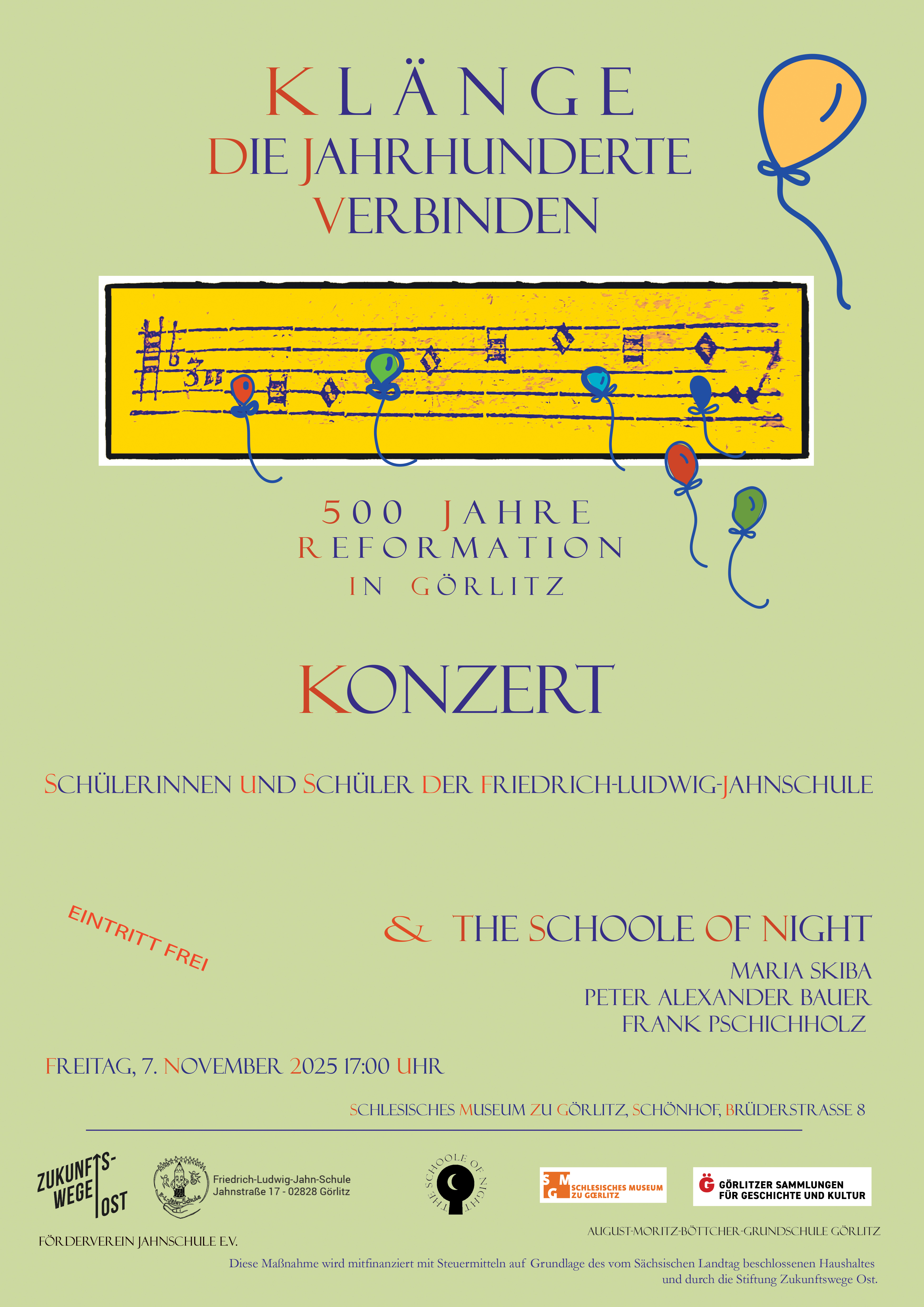
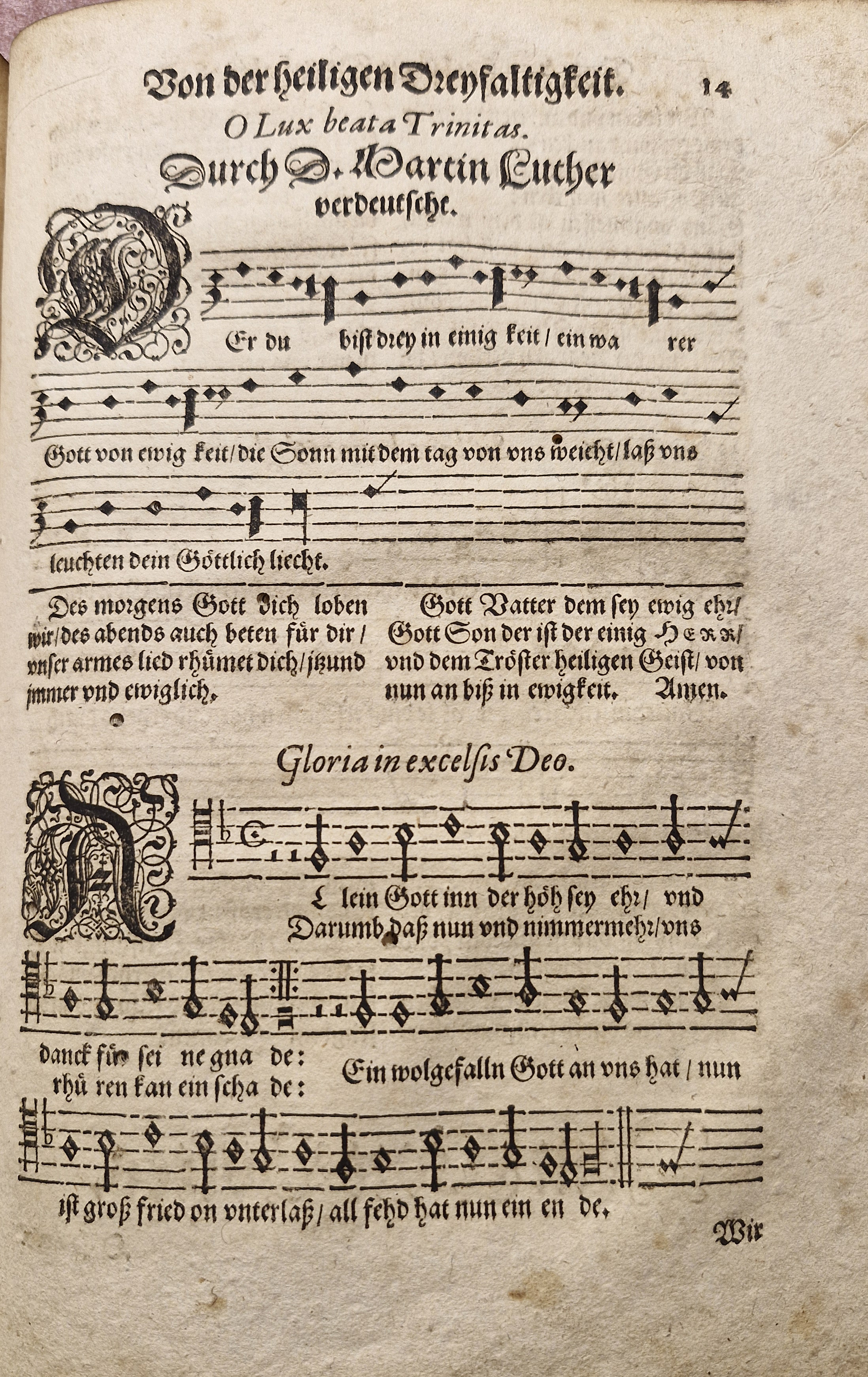
The year 2025 marks the 500th anniversary of the city’s alignment with the Reformation. The Reformation brought about profound transformations in ecclesiastical life, including significant developments in church music. Among the most notable was the introduction of vernacular languages into liturgical practice and sacred song. In collaboration with the Upper Lusatian Library of Sciences and the Silesian Museum, and the Friedrich-Ludwig-Jahnschule Görlitz, the musicians of The Schoole of Night have launched a 7 day project that enables pupils with and without disabilities to engage actively in the study and performance of music—encompassing both early and contemporary music.
Students of the Friedrich-Ludwig-Jahnschule Görlitz
THE SCHOOLE OF NIGHT Maria Skiba – soprano Peter Alexander Bauer – percussion Frank Pschichholz – lute, electric guitar and electronics
Programme
Der Anfang: Die Wunder Jesu, Frank Pschichholz 2025
Allein Gott in der Höh sei Ehr from: Geistliche Lieder,dere etliche von alters her inn der Kirchen eintrechtiglich gebraucht, 1580
Der Tag, der ist so frewdenreich from: Harmoniae, Sacrae, Vario Carminum Latinorum & Germanicorum genere, Görlitz 1613
Christus der uns selig macht from: Kirchengeseng, Darinnen die Heuptartickel des Christlichen glaubens kurtz gefasset vnd außgelegt sind, 1580
Pieśń przed wieczorem from: Summa nabożeństwa, Breslau 1573
Drum symphony
Abendlied, Frank Pschichholz 2025
Friday, 7. Nov. 2025 Schlesisches Museum Görlitz, 17.00
This project is co-financed through public funds allocated in accordance with the budget approved by the Saxon State Parliament, and supported by the Stiftung Zukunftswege Ost.
We extend our sincere gratitude for the generous provision of facilities by the Jahnschule Görlitz, the Upper Lusatian Library of Sciences, and the Silesian Museum.
The eleventh episode of Stories from the Black Kitchen. In this episode we talk about a paratext that can be found in John Dowland’s Second Booke of Songs or Ayres (1600), and about the power of musical magic. What does magic have to do with the modern world?
The song that follows is written to a poem by John Donne in a dark wave style.
Witchcraft by a Picture
from: Transcend
The Schoole of Night Frank Pschichholz, Maria Skiba
The 10th episode of Stories from the Black Kitchen. Today we discuss a transformation of the myth of Icarus that happens in song no. X from John Dowland’s Third and Last Booke of Songs (1603)
JOHN DOWLAND Love stood amaz’d at sweet beauties paine
from: The Third and Last Booke of Songs or Aires, 1603
The Schoole of Night Maria Skiba – soprano Frank Pschichholz – lute
The ninth episode of Stories from the Black Kitchen. In this episode we talk about the song pair from John Dowland’s Second Booke of Songs or Ayres (1600)
“[…] Tomorrow the Earl’s household being 160 [[at] court] are dispersed, and every man to seek a new fortune. Some few are retained to attend him, where it will be her Majesty’s will to send him.This is the greatest downfall I have seen in my days, which makes me see the vanity of the world.[…]“
The eigth episode of Stories from the Black Kitchen. In this episode we talk about the song no. XX from John Dowland’s Second Booke of Songs or Ayres (1600)
JOHN DOWLAND Tosse Not My Soule
The Second Booke of Songs or Ayres, 1600
The Schoole of Night Maria Skiba – soprano Frank Pschichholz-lute





 The Schoole of Night
You must be logged in to post a comment.