


John Dowland (1563–1626) was a prominent English composer, singer, and lutenist, renowned for his melancholic songs and influential instrumental music. Although details about his early life remain scarce, it is generally accepted that he was born in 1563 and demonstrated prodigious musical talent from a young age.
Dowland’s documented professional career begins circa 1580 in Paris, where he was employed in the household of Sir Henry Cobham, the English ambassador to the French court.
In 1598, Dowland secured a position at the court of Christian IV of Denmark, where he enjoyed patronage for several years. Notably, however, it was in London that Dowland achieved his first major success as a composer. In 1597, he published The First Booke of Songes or Ayres of Foure Partes with Tableture for the Lute, a groundbreaking collection that not only marked the first published anthology of English lute songs but also introduced a unique, flexible layout. This format enabled performers to read and perform the music in various configurations, accommodating both solo and ensemble renditions.
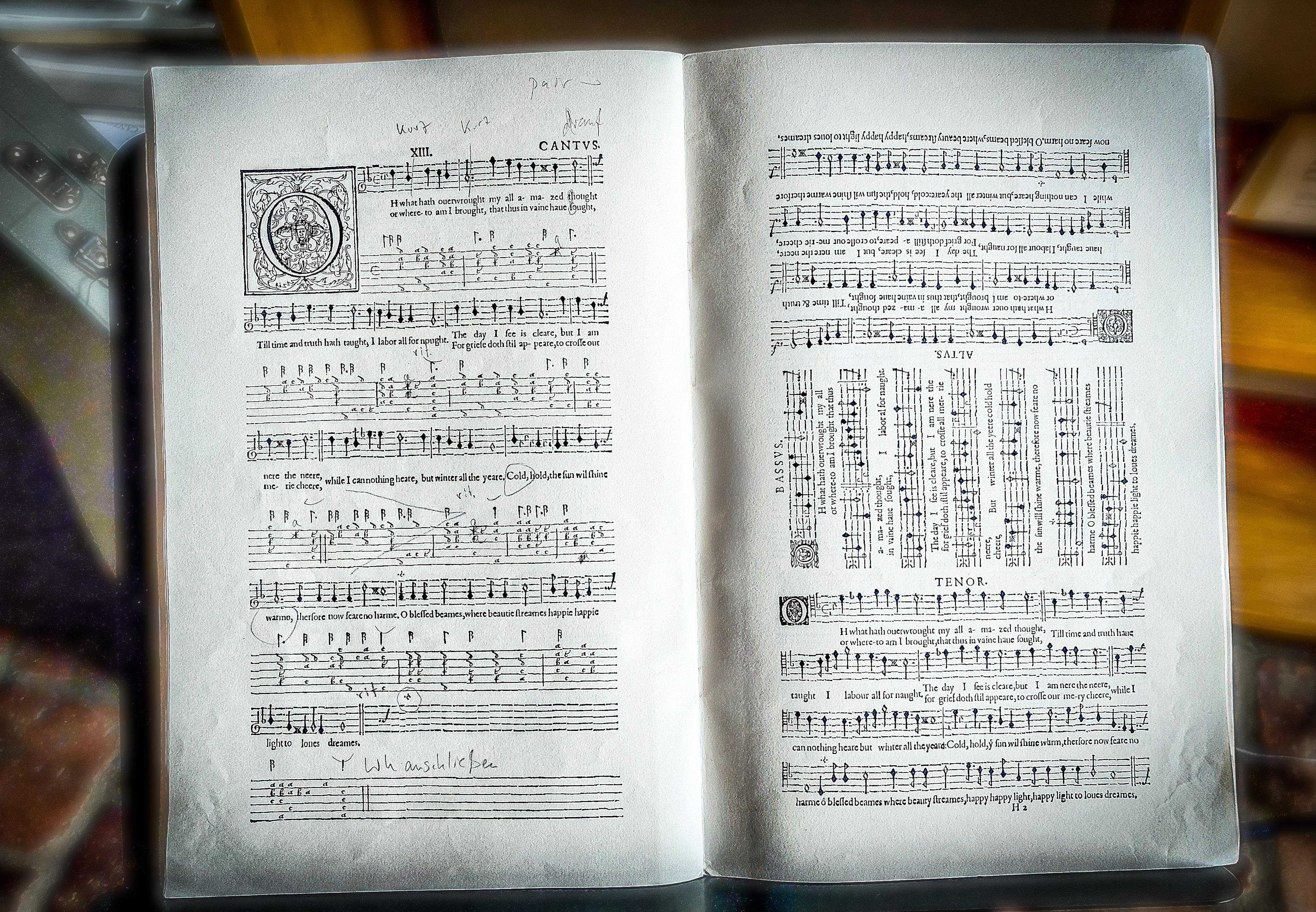
Dowland is best remembered today for his vocal works, such as Come, Heavie Sleepe, Come Againe, Flow My Teares, and In Darknesse Let Me Dwell. His instrumental compositions, particularly for the lute, have also had a profound influence on modern classical guitarists and contemporary musicians.
Dowland’s legacy extends beyond the realm of early music.
John Dowland died in London in the spring of 1626.

John Dowland is a central figure in the work of The Schoole of Night.
Musicians have been engaged with his work for over thirty years.
Recordings to date include:

A Musicall Banquet (1610) (Radio Bremen and Bremen Radiohall Records)

The Second Booke of Songs (1600) (Polskie Radio Dwójka and Dux)
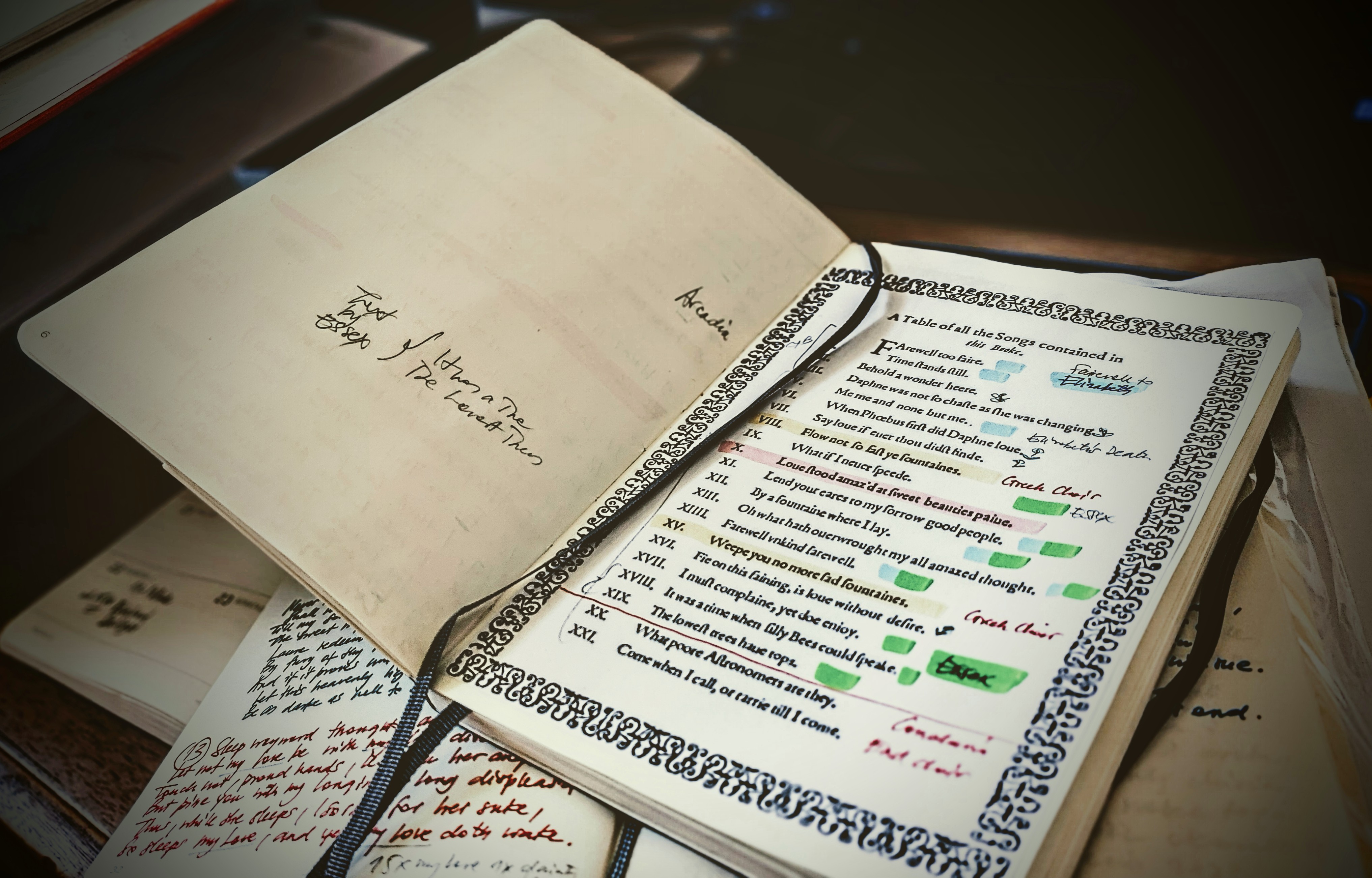
The First Booke of Songs (1597) (with Radio Bremen)
Two more recordings were completed in Summer 2026
The Third Booke of Songs (1603)
A Pilgrimes Solace (1612) (with Signatura Edition)
A book by Frank Pschichholz on The Second Booke of Songs and its political and cultural context is also ready, with translations of the songs into German.
 The Schoole of Night
You must be logged in to post a comment.